

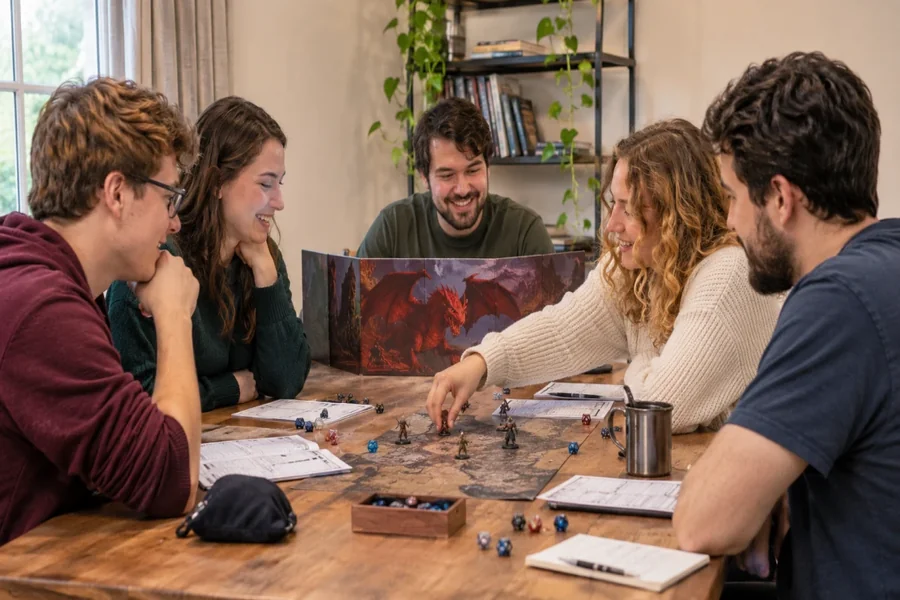
If you have ever listened to friends talk excitedly about roleplaying sessions, you might have heard them mention running a game or taking on the role of the narrator. This specific type of interactive storytelling, often referred to as DM Play, is the heartbeat of tabletop roleplaying games like Dungeons and Dragons. It might sound intimidating at first glance because it seems like you need a vast encyclopedic knowledge of rules, but the truth is much simpler and friendlier. You are essentially just guiding your friends through a collaborative adventure where everyone gets to be the hero.
The core idea is that you act as the referee and the storyteller simultaneously. While the other people at the table build characters and make decisions, you describe the world around them and tell them the consequences of their actions. Think of yourself as the director of a movie that is being written in real time. Getting started with DM Play is easier than you might imagine, as you do not need to memorize every single page of the rulebook before your first gathering.
Setting the Scene for Your First Session
You do not need an expensive setup or complex maps to host your first story night. All you really need is a set of dice, some scratch paper, and a group of friends who are willing to laugh and make mistakes with you. Start by picking a small, self-contained adventure that is designed for beginners, which often comes with pre-generated characters so your friends do not have to spend hours doing math. When you use DM Play techniques, your primary job is to keep the energy moving and make sure everyone feels like they have a fair shot at success or failure.
Focus on describing the senses to make the environment feel real for your friends. Instead of just stating that they are in a dungeon, tell them about the smell of damp stone or the sound of water dripping in the distance. This simple shift helps your players visualize the space and encourages them to ask questions about what they see. Remember that perfection is not the goal, as having a fun time with your friends is the only metric that truly matters.
Guiding the Flow of the Story
Once the adventure begins, you will find that your players will constantly try to do things you did not expect. This is the most exciting part of the process, and your main responsibility is to roll with their creative choices. If a player wants to try something wild, like jumping across a chasm or talking to a guard instead of fighting them, you decide how difficult that task should be. During DM Play sessions, you are the final authority, but you should always try to say yes to creative ideas whenever possible.
Try to keep the narrative moving forward even when the players get stuck or spend too much time debating simple choices. You can gently prompt them by having a character in the world interrupt, or perhaps by introducing a sudden change in the situation. If a combat encounter or a complex puzzle takes too long, it is perfectly fine to simplify it on the fly. Your friends will appreciate your ability to keep the narrative momentum going over strictly following every single rule in the book.
Keeping Things Simple and Fun
Do not worry if you make a mistake with a rule or forget how a specific item works. Even the most experienced narrators have to pause and look things up during their games. If you get stuck, just make a fair ruling in the moment so the game can continue without a long interruption. You can always check the actual rules later and fix things for the next time you sit down to play.
Focus on building memories rather than worrying about being a master of game mechanics. Your friends are there because they want to share a fun experience with you, not because they are looking for a flawless simulation. Stay relaxed and remember that you are a player in this story too. As long as you are keeping the table laughing and engaging with the world, you are doing a fantastic job.
Wrapping Up Your Adventure
Being the person who organizes and runs the session is a rewarding way to spend time with your friends. You provide the framework for their creativity and help shape the story that you all will talk about for weeks to come. Take a deep breath, trust your instincts, and do not be afraid to jump in. The best way to learn is simply to gather your friends and start playing.
